


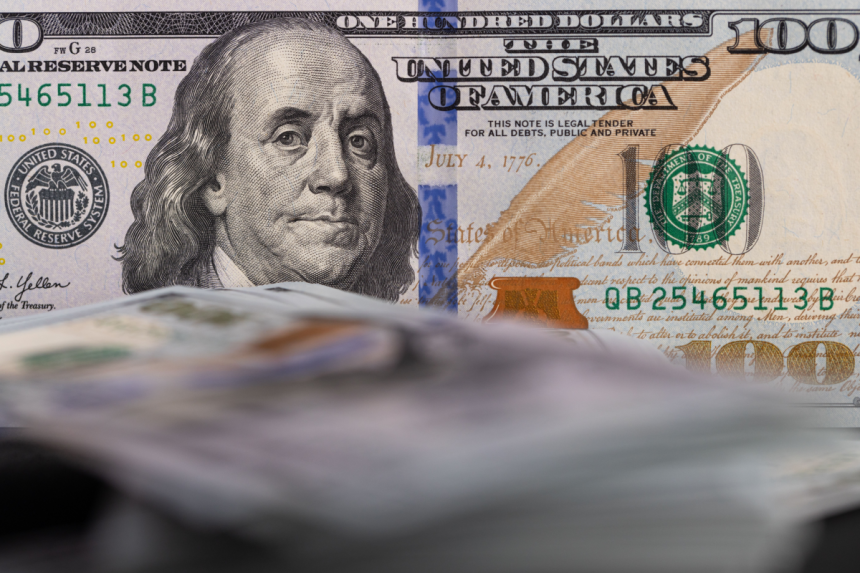
Safe-haven demand returns to markets
The U.S. dollar climbed sharply on Thursday after President Donald Trump signaled a more aggressive military approach toward Iran, dampening earlier hopes of a near-term de-escalation in the conflict. Investors moved swiftly into traditional safe-haven assets as oil prices spiked and global equity markets retreated.
In a televised address, Trump pledged intensified strikes on Iran over the next two to three weeks. He offered no firm timeline for reopening the Strait of Hormuz or ending the conflict, both of which remain central to stabilizing global energy markets. Iran’s military responded with a warning of “more crushing, broader and more destructive” attacks against the United States and Israel.
Greenback posts strongest day in weeks
The renewed geopolitical tension prompted a broad selloff in risk assets. The dollar index, which tracks the U.S. currency against a basket of major peers, rose 0.68% to 100.24, marking its strongest daily performance since March 18. The move erased most of the dollar’s losses from the previous two sessions, when markets had briefly rallied on signs of diplomatic progress.
Non-dollar currencies weakened across the board. The euro fell 0.66% to $1.1513, while sterling dropped 0.88% to $1.319. The Australian dollar, often viewed as a proxy for global growth expectations, declined 0.95% to $0.6863.
The Japanese yen weakened 0.6% to 159.72 per dollar, edging closer to the closely watched 160 level that many analysts consider a potential trigger for intervention by Japanese authorities.
Oil surges, equities retreat
Energy markets reacted strongly to the prospect of prolonged disruption. Brent crude futures jumped nearly 8% to $109.10 per barrel, reflecting growing concern over sustained supply constraints in the Gulf region.
Carol Kong, a currency strategist at Commonwealth Bank of Australia, said Trump’s remarks failed to reassure investors. “Markets are starting to realize that the war will probably escalate further from here before de-escalating,” she noted, adding that the dollar could continue strengthening as expectations of a global economic slowdown build.
Rate-cut outlook in focus
Higher oil prices also fueled concerns that inflation pressures could intensify, pushing U.S. Treasury yields higher and complicating the outlook for interest rate cuts. Rising yields reflect investor anxiety that persistent energy-driven inflation may limit the Federal Reserve’s room to ease policy.
Attention now turns to Friday’s U.S. non-farm payrolls report. Economists surveyed by Reuters expect a gain of 60,000 jobs for March. A weaker-than-expected reading could amplify fears of stagflation, combining slower growth with elevated inflation.
Kyle Rodda, senior financial market analyst at Capital.com, warned that markets could become especially volatile ahead of the Easter long weekend. With geopolitical tensions intensifying and key economic data pending, investors are bracing for continued swings across currencies, commodities and equities.