


Introduction
Most Asian currencies weakened as investors reacted to escalating conflict in the Middle East, while the U.S. dollar held near a five-week high on haven demand and oil prices stayed elevated. Markets are focused on whether the U.S.-Israel campaign against Iran expands further and whether threats around the Strait of Hormuz translate into sustained disruption. For Asia, the key pressure point is energy: higher crude prices can widen trade deficits for net importers and raise inflation risks, weighing on regional currencies.
Dollar Holds Firm on Haven Demand
The U.S. Dollar Index remained supported after rising sharply overnight, with further gains in early Asian trading. The move reflects a classic risk-off pattern in which investors favor liquidity and perceived safety when geopolitical risk rises. The dollar’s strength can amplify pressure on emerging market currencies by tightening financial conditions and raising the local cost of dollar-priced imports such as crude oil.
Middle East Escalation Keeps FX Volatility Elevated
The conflict has intensified following U.S. and Israeli strikes on Iran and subsequent retaliatory missile and drone attacks from Tehran. President Donald Trump said the operation could continue for “some weeks,” reinforcing uncertainty about duration and objectives. Iran has threatened a full closure of the Strait of Hormuz and warned ships against transit through the waterway, which is associated with roughly one-fifth of global oil flows. That threat premium is supporting crude prices and raising macro risks globally.
Oil Price Pressure Hits Net Energy Importers
Higher crude prices tend to weigh most on countries that import large volumes of energy, because rising fuel bills can worsen trade balances and add inflation pressure. That dynamic has kept several Asian currencies under stress, particularly those already sensitive to current account dynamics and imported inflation.
Asia FX Moves: Won and Rupee Under Pressure, Yuan Firms
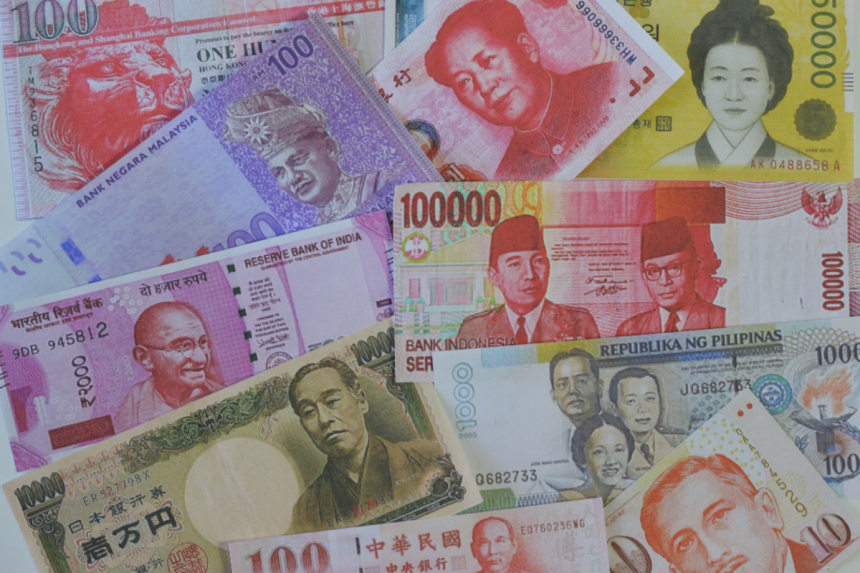
Among major movers, the South Korean won and Indian rupee remained weaker, reflecting sensitivity to higher oil costs. The won’s USD/KRW rose about 0.8%, while USD/INR gained about 0.4%. The Singapore dollar was broadly steady.
In contrast, the Chinese yuan firmed after the People’s Bank of China set a stronger daily midpoint at 6.9088, described as the most forceful upward adjustment in about six months. Offshore USD/CNH eased modestly after two days of gains.
The Japanese yen steadied after a sharp overnight move, with USD/JPY slightly lower as fragile risk appetite kept haven demand in play. The Australian dollar edged higher on the session.
Conclusion
Asian currencies remain pressured by the combination of a firmer dollar and elevated oil prices as the Iran conflict raises the risk of sustained disruption around the Strait of Hormuz. Net energy importers face the greatest downside due to trade and inflation spillovers, while policy actions, such as China’s daily yuan fixing, can shape short-term currency direction. Near-term FX volatility will likely remain headline-driven, with oil developments and conflict duration expectations acting as the primary catalysts.