


Historic change to paper currency
Several updates to U.S. currency are taking effect this year. The U.S. Mint has halted production of new pennies for circulation, while redesigned coins marking the nation’s 250th anniversary are being introduced. In addition, President Donald Trump’s likeness is expected to appear on a commemorative gold coin.
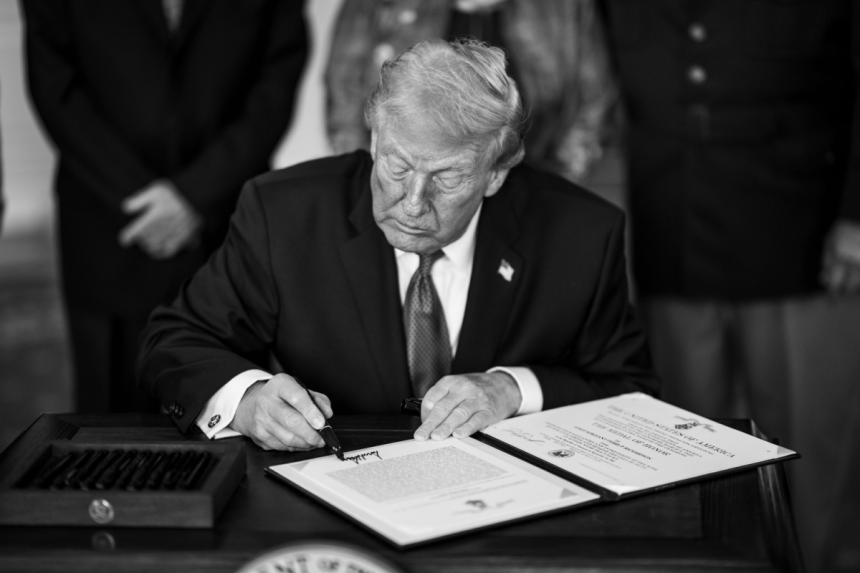
In a separate development, Trump’s signature is slated to appear on paper currency later this year. If implemented as described, it would mark the first time the signature of a sitting president appears on U.S. banknotes.
Printing expected to begin this summer
According to reports, the new bills will begin printing this summer, starting with the $100 denomination, before entering circulation. Treasury officials have not provided detailed information about the final design.
For more than 165 years, U.S. paper money has carried two signatures: the Treasurer of the United States and the Secretary of the Treasury. A 2021 series $1 bill, for example, displays the signatures of then-Treasurer Lynn Roberge Malerba and former Treasury Secretary Janet Yellen.
A Treasury press release indicated that Trump’s signature “will appear … along with the Secretary of the Treasury,” suggesting it may replace the current Treasurer’s signature on future issues.
Supporters call it symbolic recognition
Treasury Secretary Scott Bessent described the move as “appropriate” and said it represents “a powerful way to recognize the historic achievements of our great country and President Donald J. Trump.”
Treasurer Brandon Beach also voiced support, stating that placing the president’s signature on currency is “well deserved.”
It remains unclear whether the new bills could become collector’s items, though changes to currency design often attract interest among numismatists.
Legislative pushback emerges
The proposal has drawn criticism from some lawmakers. Rep. Jimmy Gomez (D-Calif.) introduced legislation aimed at preventing the president’s signature from appearing on U.S. currency or securities.
In a statement, Gomez argued that U.S. currency “belongs to the American people, not the President,” and described the move as inappropriate personalization of national symbols.
With printing reportedly set to begin soon, the debate highlights how changes to currency design can quickly become politically charged. Whether the signature ultimately appears on circulating notes may depend on both administrative decisions and potential legislative action in the months ahead.