


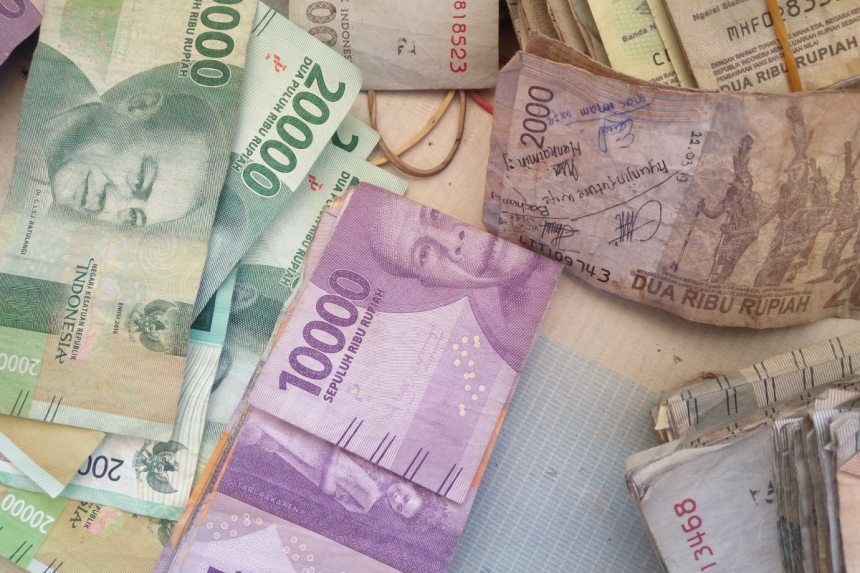
Forbes lists rupiah among world’s weakest
Forbes recently ranked the Indonesian rupiah as the fifth weakest currency globally as of April 7, 2026, based purely on its nominal exchange rate against the U.S. dollar.
Using Open Exchange data, the publication cited a rate of Rp 17,066 per USD at the time of compilation. Only the Iranian rial, Lebanese pound, Vietnamese dong, and Lao kip were weaker in nominal terms.
The ranking drew attention because Indonesia has the largest GDP in ASEAN, yet its currency has faced sustained pressure. Forbes attributed the rupiah’s slide to high inflation and concerns over global economic slowdown.
Market data since then show continued volatility. On April 17, the rupiah traded around Rp 17,182 per USD, after briefly touching a record low near Rp 17,130 earlier in the week. Analysts point to a firm U.S. dollar and geopolitical tensions as primary drivers.
Economists call methodology “misleading”
Indonesian economists have pushed back strongly against the ranking. Josua Pardede, Chief Economist at Bank Permata, described the assessment as “misleading,” arguing it relies solely on nominal exchange rate comparisons without considering broader economic fundamentals.
Pardede emphasized that the Real Effective Exchange Rate (REER), which measures a currency’s value against a basket of trading partners adjusted for inflation, paints a different picture. Based on 2020 benchmarks, he said the rupiah appears undervalued by 2% to 5%, suggesting competitive strength rather than structural weakness.
Fundamentals show resilience
Indonesia’s macroeconomic indicators have remained relatively stable. In 2025, GDP growth reached 5.11%, while foreign exchange reserves stood at $148.2 billion, according to Bank Indonesia.
Inflation in March 2026 registered at 3.48%, still within the central bank’s target range. Investment realization in 2025 exceeded official targets, surpassing Rp 1,931 trillion.
Banking sector data also signal healthy liquidity conditions, with credit growth at 9.37% year-over-year and deposits rising 13.18%.
Pardede stressed that the current depreciation reflects global sentiment rather than domestic fragility, distinguishing temporary currency pressure from structural economic weakness.
Geopolitics adds near-term risk
Analysts warn the rupiah could weaken toward Rp 17,300 per USD if tensions escalate in the Strait of Hormuz, particularly involving Iran. Energy market volatility and safe-haven flows into the dollar remain key risks.
However, economists broadly agree that the present environment differs significantly from the 1998 Asian financial crisis, when Indonesia faced systemic collapse. Today’s fiscal and monetary frameworks are viewed as considerably stronger.
While headline rankings may highlight nominal weakness, many analysts argue that assessing currency health requires deeper analysis of inflation-adjusted metrics, trade competitiveness, and underlying economic performance.