


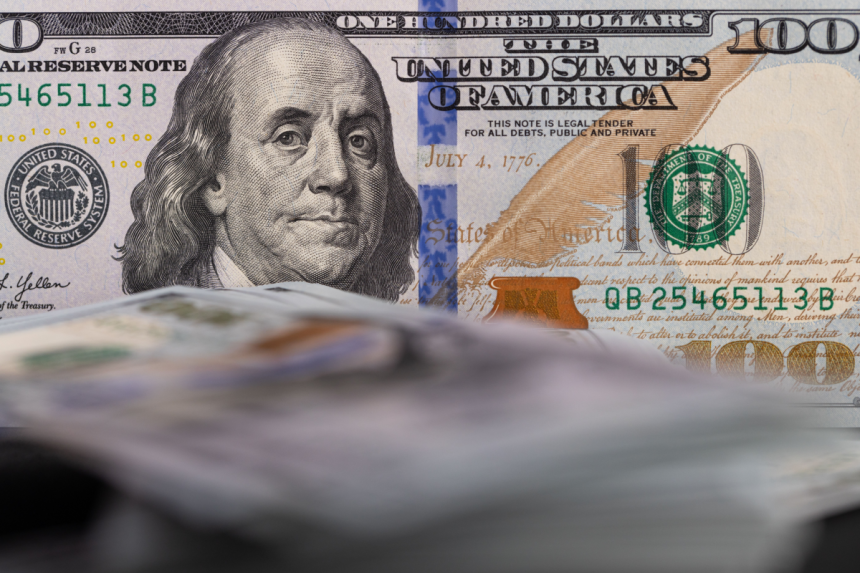
Greenback holds firm amid geopolitical doubt
The U.S. dollar strengthened further on Wednesday, extending recent gains as traders weighed global inflation pressures and questioned the likelihood of a swift resolution to the Iran conflict.
Although reports indicated that Washington had sent a 15-point proposal to Tehran, hostilities between Israel and Iran continued with fresh airstrikes. President Donald Trump said the United States was making progress in discussions, but Iranian officials denied that direct negotiations had taken place, leaving markets cautious.
The U.S. dollar index, which tracks the currency against a basket of six peers, rose 0.23% to 99.41. The euro fell 0.19% to $1.1585, while the British pound declined 0.19% to $1.3387.
Currency markets diverge from equities
Despite renewed geopolitical uncertainty, equity markets showed resilience. The S&P 500 gained 0.8%, while global crude oil prices dropped 3.8% to $100.54 per barrel. Bond markets also steadied after a volatile stretch, with the yield on the U.S. 10-year Treasury note falling 5.6 basis points to 4.336%.
Foreign exchange markets, however, reflected a more cautious stance. “The fact that the dollar is staying strong suggests that the FX market is taking a slightly different view than equities and bonds,” said Shaun Osborne, chief FX strategist at Scotiabank in Toronto.
He added that if investors believed a genuine de-escalation was imminent, some of the dollar’s risk premium would likely unwind.
Inflation data and rate expectations in focus
In the United Kingdom, consumer price inflation held steady at 3% in February, matching January’s rate. Analysts expect price pressures to build further as Middle East tensions feed into energy costs. Sterling found limited support from the data.
Against the Japanese yen, the dollar climbed 0.23% to 159.05. Minutes from the Bank of Japan’s January policy meeting indicated that several board members supported additional rate increases, though no specific timetable was outlined.
The Australian dollar fell 0.39% to $0.6966. February inflation data showed a 3.7% annual increase before the Iran conflict began, slightly below forecasts.
Shifting central bank outlook
While markets still broadly expect the Federal Reserve to keep rates unchanged this year, tightening expectations have edged higher. Fed funds futures now imply a small probability of a 25-basis-point hike in December, compared with expectations for a rate cut just a week earlier.
Joel Kruger, market strategist at LMAX Group in London, noted early indications of a more hawkish tone from central banks outside the United States, particularly the European Central Bank and the Bank of Japan. Narrowing yield differentials could influence currency flows in coming months.
For now, the dollar’s resilience reflects lingering geopolitical risk and persistent inflation concerns, even as other asset classes show tentative optimism.